

How to choose a travel backpack: size, fit and features
How to choose a travel backpack: what capacity you need, cabin-size limits, clamshell vs top-loading, fit, weight and features that matter for trips from India.
By TravelGearly Editorial TeamUpdated
Quick answer
Choose a travel backpack by trip length first — 20–30 L for weekends, 35–45 L for carry-on-only weeks, 50–65 L for treks and long backpacking trips. Then check it fits your airline's cabin limits, opens like a suitcase if you use packing cubes, weighs little when empty, and has a hip belt that carries weight comfortably.
A backpack you like will make every trip easier; the wrong one will hurt your shoulders and still not fit your things. This guide explains how to choose a travel backpack in the order that matters: size, fit, then features.
For our current picks by use case, see best travel backpacks.
1. Pick the size by trip type
| Capacity | Best for | Notes |
|---|---|---|
| 15–25 L | Day bag, 1-night trips | Packable versions double as a spare bag |
| 25–35 L | Weekends, business overnights | Usually fits under a seat |
| 35–45 L | One-bag travel for a week | Often fits cabin limits — check your airline |
| 50–65 L | Treks, long backpacking trips | Usually needs to be checked in |
| 65 L+ | Expeditions | Rarely needed for regular travel |
Bigger is not better. You’ll fill whatever you carry.
2. Check cabin limits
Many Indian airlines publish cabin limits around 55 × 35 × 25 cm and 7 kg for economy — but this varies by airline and fare type, and international carriers differ. Measure a loaded bag, not an empty one. A backpack that weighs about 1 kg empty leaves more of that 7 kg for your things. Plan totals with the luggage weight calculator.
3. Choose how it opens
- Clamshell (suitcase-style): zips open fully. Best for city travel and anyone using packing cubes.
- Top-loading: lighter and more weatherproof; best for treks. Harder to find things at the bottom.
- Panel + top access: a middle ground on many trekking packs.
4. Get the fit right
- Torso length matters more than your height. Adjustable back panels help.
- Hip belt should sit on your hip bones and carry most of the weight.
- Shoulder straps should wrap without gaps; a sternum strap stabilises the load.
- Try it loaded. Put 7–10 kg in it before you decide.
5. Features that actually matter
- Padded laptop sleeve that opens separately for airport security
- Small top pocket for ID, phone and boarding pass
- Lockable zips for trains and hostels
- Water-resistant fabric, plus a rain cover for monsoon and treks
- Side bottle pocket
- Stowable straps if you’ll check it in
Features that matter less: USB charging ports (it’s just a cable through the bag), lots of tiny pockets, and heavy “anti-theft” hardware.
6. Consider your trip style
- City and flights: clamshell 35–40 L. See how to organize a carry-on.
- Treks: 50–60 L top-loader with a proper hip belt. See travel essentials for trekking.
- Business: 25–30 L with a structured laptop section.
Not sure a backpack is the right investment for your trips? The travel essentials finder ranks what to buy first.
Turn this into your own checklist
Answer seven quick questions and get a checklist you can tick off, edit and print.
Build my packing listGear that helps
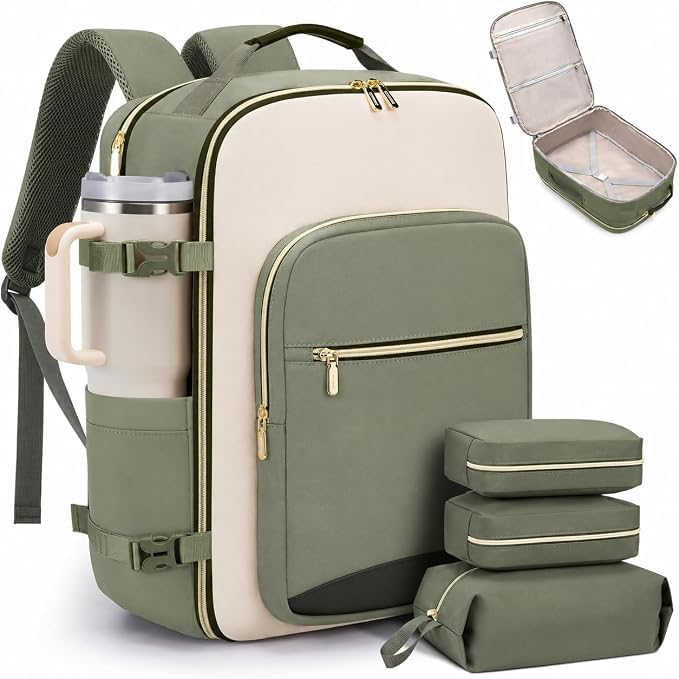
RNAZLIS 40L Carry-On Travel Backpack with 3 Packing Cubes
Backpacks
- Good for
- One-bag travel, Week-long trips
Size, specs and price can change — check the listing before you buy.
Check price on Amazon.in (opens in a new tab)
MONJAY 7-Piece Packing Cube Set
Packing Cubes
- Good for
- Most trips, Suitcases
Size, specs and price can change — check the listing before you buy.
Check price on Amazon.in (opens in a new tab)Some links on this website are affiliate links. If you make a purchase through them, we may earn a commission at no additional cost to you. Read our affiliate disclosure.
Frequently asked questions
What size backpack do I need for a one-week trip?
Is a 40 L backpack allowed as cabin baggage?
Should I choose a backpack or a suitcase?
We research travel essentials for Indian travellers using official guidance (airlines, BCAS, IATA, tourism boards), manufacturer specifications and our own packing frameworks. We do not publish invented reviews or ratings. Read more about how we research.